
Split Heat Pumps at 3920 Mystic Valley Parkway
Independent owner site commentary · Caveat emptor · Not an official association page
Address: 3920 Mystic Valley Parkway, Medford, MA 02155 (Mystic River Park). Building facts used here: eleven stories, 259 units, completed 1988, originally designed around Magic-Pak through-wall packaged HVAC. Unit counts and story counts in older drafts varied (255 / 260 / 265); this site follows the City of Medford assessor’s unit count: 259 units, eleven stories.
Opener: The board invited exterior machines. Shared equity pays.
The board recently moved toward approving exterior split heat pumps for individual units. That is not a minor “upgrade.” It is a policy that invites outdoor condensers, refrigerant line sets, indoor wall heads, condensate drains, mounts, covers, and mismatched brands onto balconies and facades that were never designed for them.
Here is the money thesis, stated without brochure soft-focus: owners face about a $30,000 unit value hit over roughly ten years — even if they never install a machine — because a checkerboard facade drags down every unit behind the same curb appeal. The April 15, 2025 owner memorandum on loss of investment works an illustration (explicitly not an appraisal) of about 5% on about a $550,000 unit, which is about $27,500. Over a ten-year appreciation path, that memorandum projects a still larger gap between a clean facade and a cluttered one (on the order of tens of thousands more per unit in that illustrative model). Other owner drafts used bands of roughly 3–7% or 5–10%. Treat the “about $30,000 over ten years” figure as the public, rounded investment warning drawn from those papers — illustration, not an appraisal.
The board’s proposal to permit individual exterior heating and cooling machines on balconies year-round is discussed here only in relation to the policy and its building-wide consequences. The April 2025 owner proposal context is summarized in the heat-pump policy essay; nothing more is alleged on this page about any individual.
If you are a buyer, price the chaos. If you are an owner who never wanted a balcony machine, understand: patchwork appearance deters buyers whether you install or not. The owner summary is blunt: the exterior would be swamped with cords, wires, fans, tubes, and drainage pipes in a variety of sizes and colors; it would be clear to any purchaser that the place has let itself go.
Preserve your investment. Vote against outdoor heating and cooling machines.
What the building was designed for: Magic-Pak, not balcony machines
Mystic River Park was designed around Magic-Pak through-the-wall packaged units: integrated heating and cooling seated in sleeves, short duct runs, condensate managed consistent with the original envelope. Magic-Pak keeps heavy mechanical presence off the balcony as a primary mounting surface, supports like-for-like replacement inside an existing sleeve pattern, and preserves exterior uniformity — the curb-appeal product condominium equity depends on.
Split heat pumps are a different animal: indoor evaporators, outdoor condensers, refrigerant line sets, drilling, electrical upgrades, multiplied condensate leak points, and visible outdoor equipment that will never match across hundreds of units. Retrofitting balcony split heat pumps is not “keeping up with efficiency trends.” It is rewriting the building after the fact without redesigning the building.
Prospective buyers should ask a plain question: was this tower designed for what the board is now willing to allow? The answer in the owner materials is no. The building was designed for Magic-Pak. The heat-pump policy change pretends otherwise.
Top 25 reasons this policy is wrong for 3920
Each reason below is grounded in owner memoranda, affidavits, working papers, and (where noted) fetched public sources. Harsh? Yes. Invented? No.
Shared Equity Wipeout (about $30,000 over ten years, even if you never install)
Condominium value is partly shared facade. You do not buy only your floor plan; you buy the first impression from Mystic Valley Parkway. Owner memoranda on loss of investment argue that unsightly exterior HVAC alone can cut value in aesthetics-sensitive urban markets, with illustrative bands around 3–7% (and in another draft 5–10%). Using about 5% on about a $550,000 unit yields about $27,500 — the seed of the “about $30,000 over ten years” warning when appreciation paths in those papers are considered. Owners who never install still live behind the ruined first impression. That is shared equity wipeout by policy.
The Building Looks Like It Gave Up (patchwork is decline in public)
The owner memorandum puts the buyer’s eye test without varnish: if you examined a condominium and saw a variety of unplanned, random heating systems — outdoor units of mixed size and color, lines crawling the facade — you would conclude you were looking at a condo in decline, a board that chose a free-for-all. Half the building with machines and half without is worse, not better. Mixed adoption is a broken-tooth facade. Brokers and buyers decide on that look long before they read a heat-pump brochure.
Liability Orphaning (neighbor’s unit fails, you sue the neighbor, board washes its hands)
Decentralized, owner-installed exterior equipment creates gray zones. Condensate overflows, vibration damage, and injury risk on limited common elements turn neighbors into defendants and the association into a bystander arguing “owner equipment.” Owner affidavits (August 2024) warn that approving outdoor split heat pumps on balconies creates significant and unnecessary personal-injury risk for the association; rotating parts, inadequate monitoring across common areas, and insurance cost passed to the community are on the record. This page does not invent waiver text. What the papers show is the orphaning pattern: when systems fail across unit lines, blame and cost seek the nearest deep pocket — often the neighbor, sometimes the trust, always the assessment.
Condensate Water Onto Stacked Balconies
Split heat pumps produce condensate as they cool and dehumidify. Owner informational memoranda describe on the order of 1.5 to 3 pints per hour for a typical 12,000 BTU class unit on a hot humid day — roughly 4.5 to 9 gallons daily if running continuously. On a vertical stack of balconies without a building-wide split heat pump drainage design, improvisation means dripping onto people below: wet furniture, slippery surfaces, ruined belongings, interrupted amenity use. Continuous condensate is not rain. Rain stops. Machines drip while they run.
Envelope Penetrations After the Building Was Sealed
Installing split heat pumps means drilling for refrigerant lines and electrical. Owner notes warn about opening large numbers of new entry points into the envelope after sealing work — who seals them, who inspects them in year five, who pays when a high-floor penetration feeds a stain into the unit below. Affidavit materials flag drilling the brick exterior and the long-term leak hunt that follows imperfect seals. A tower that has already lived through exterior spending should not volunteer a forest of new holes.
Noise (your neighbor’s condenser and your own)
The April 15, 2025 noise memorandum states outdoor split heat pump condensers typically operate in a roughly 40–60 dB range depending on model, load, and maintenance — intrusive in close balcony proximity — while Magic-Pak systems are characterized there as emitting far less external noise (on the order of under 30 dB in that comparison). On a high-rise, sound reflects between closely spaced decks. Peak seasons mean more run time; night means less ambient cover; aging and poor maintenance mean more noise, not less. Balconies stop being retreats. They become equipment pads with river views.
Northeast Cold (heating capacity falls when you need heat most)
Owner twenty-reasons analysis notes split heat pumps may struggle to provide consistent heating in extreme cold compared with the robust gas or electric heating character of Magic-Pak systems; split heat pumps excel at cooling, but if heating is the primary Massachusetts need, Magic-Pak’s furnace-based design may be more effective for the duty. Fetched MassHVAC material (Cold-Climate Heat Pumps Explained, Massachusetts 2026) states a heat pump’s heating capacity is not constant — it varies with outdoor temperature — and that a typical non-cold-climate unit can fall sharply at low temperatures (example curve in that article: down toward roughly 28% of nameplate at 5°F for a non-cold-climate illustration). Cold-climate certification exists precisely because capacity retention matters in Massachusetts winters. Branding a balcony free-for-all as “heat pumps” does not guarantee cold-climate performance unit by unit across 259 units.
Mold and Dust Inside the Indoor Heads
The Boston Globe (Jim Morrison, Feb. 21, 2024) reports air-quality experts saying split heat pump units collect dust and mold and can be expensive to clean. Jeffrey C. May: traditional HVAC has an air filter; mini-splits “just have that little insect screen… and those don’t filter very much.” Dust coats fan blades and coils; mold spores proliferate in dusty, damp interiors. Mycologist Deborah Gordon: virtually every split heat pump she had examined had mold on the inside; “Mini-splits are just notorious.” Chris McDonough: dusty cleans in the ballpark of $500–$600; moldy work with negative pressure / scrubbers “could be thousands of dollars.” “It’s not a question of whether mini-splits will get moldy, it’s when.” Multiply that maintenance reality across owner-maintained heads in a high-rise.
Maintenance Chaos Across Individual Systems
Split heat pumps require individual upkeep. In a 259-unit ecosystem, “everyone maintains their own” is fiction. Some will. Many will not. Condensate pans clog; fans collect debris; outdoor units weather unevenly. The building wears the failures. Magic-Pak’s multifamily service pattern is the opposite product: standardized equipment, clearer association-side servicing logic, fewer owner-dependent failure modes hanging on the facade.
Insurance Gaps for Owner-Installed Exterior Equipment
Owner water-discharge memoranda warn that water damage from split heat pumps may not be fully covered by standard condominium insurance if deemed a result of owner negligence or improper installation — exposing association and owners to uncovered repair costs and legal claims. Affidavits add that personal-injury liability, if found, impacts the cost of insuring the building and passes through to the community. Buyers should ask, in writing, what the master policy actually covers when owner-mounted balcony equipment fails onto a neighbor.
Excess Refrigerant Lines, Hoses, and Conduit (facade spaghetti)
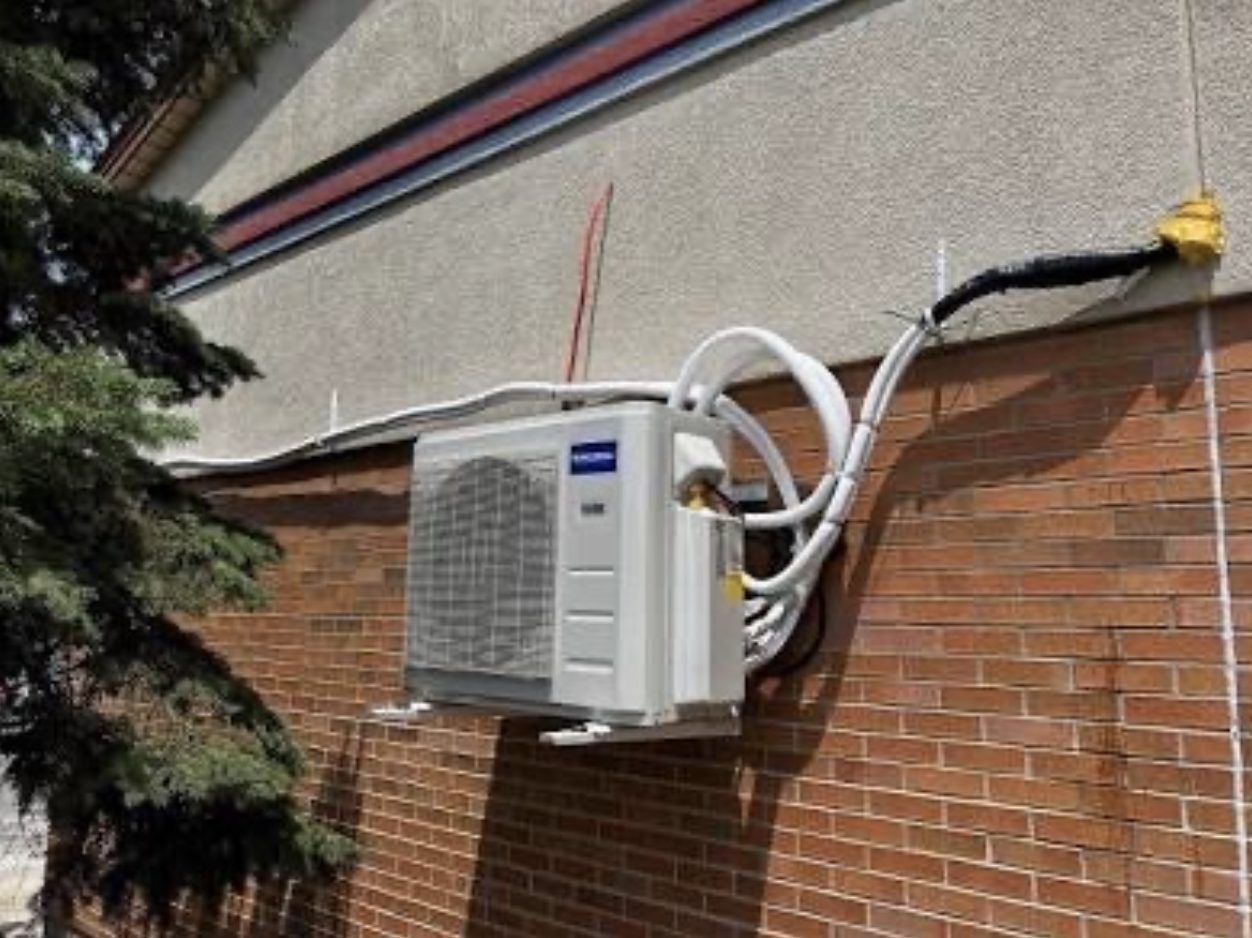
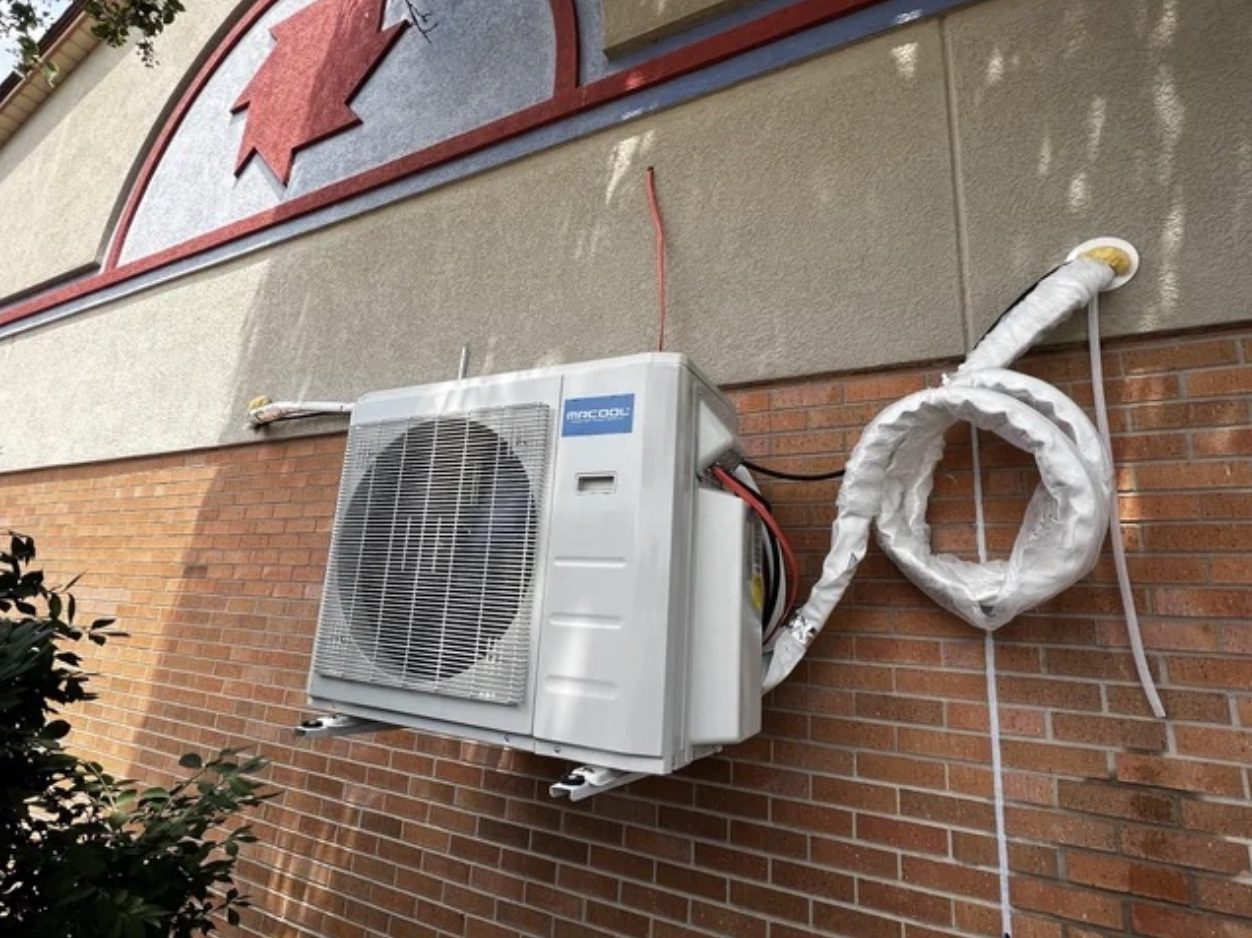
Split heat pumps require line sets between indoor and outdoor units. Across a tower, that means insulated bundles, zip ties, straps, plastic covers that yellow, grey conduit that sags — facade spaghetti. The owner summary’s visual indictment — cords, wires, fans, tubes, drainage pipes in a variety of sizes and colors — is exactly what line-set proliferation looks like from the street and from neighboring decks.
Condensate Code / Nuisance Risk
Owner informational memoranda cite the International Mechanical Code Section 307 (Condensate Disposal) as incorporated into Massachusetts 780 CMR: condensate shall be collected and discharged without creating a nuisance or hazard. IMC 307.2.1 language quoted in those materials: condensate shall not discharge into a street, alley, or other areas so as to cause a nuisance. Uncontrolled dripping onto balconies where residents sit is the fact pattern those memos warn against.
Freeze-Thaw Ice and Defrost Dump
In Massachusetts winters, outdoor units generate defrost water; condensate and defrost left on balconies can freeze, create slip hazards, and crack surfaces through expansion. Owner papers contrast Magic-Pak’s internal condensate management with split heat pumps’ external discharge geometry. Freeze water patches, icy decks, and algae-prone wet seasons are quality-of-life and liability problems — not abstract climate footnotes.
Indoor Wall Units Destroy Clean Interiors
Buyers who expect premium design do not want a white plastic evaporator box as the visual centerpiece of “modern HVAC.” Magic-Pak’s concealed approach serves clean lines; split heat pumps advertise themselves indoors and outdoors simultaneously. The loss-of-investment memorandum notes NAR-linked buyer sensitivity to uncluttered walls and modern finishes; bulky wall heads make units feel dated or less luxurious. Interior ugliness is still ugliness — and still price.
Aging, Rust, Oxidation, Uneven Weathering
Outdoor condensers age in public. Stained wraps, drip trails, oxidation on copper, debris around pads, covers that yellow — the “new install” becomes “neglected building” fast. Owner papers note that ongoing aesthetic concerns from weathering and inconsistent maintenance can further exacerbate value loss beyond an initial hit. A free-for-all guarantees uneven care. Uneven care guarantees a facade that looks tired in different ways on every floor.
Mounting Mismatch (platforms, cement blocks, brackets)
Outdoor units need stands, pads, brackets, or platform improvisations that never match balcony design language. Insufficient mounting transmits vibration; mismatched mounts telegraph DIY mechanical culture on limited common elements. The building becomes a catalog of whoever’s contractor showed up that week.
Different Brands, Colors, Hoods, Covers
Without a single building-standard exterior HVAC architecture, owners choose different brands, colors, hoods, and line covers. That is the patchwork. Condo communities already understand why owners cannot each invent exterior lighting or paint railings in personal colors. HVAC machines on balconies year-round are a more extreme version of the same problem.
Vibration Through Walls and Structure
Improper or imperfect mounting lets vibration travel through walls and structure. Owner noise and summary materials list insufficient mounting pads, vibration moving through walls, and mechanical issues that produce excessive vibration. Neighbors feel what they do not see. Sleep and quiet enjoyment become contested facts in a stacked tower.
Electrical Upgrades and Disruption
Split heat pumps may demand significant electrical upgrades and dedicated circuits. Magic-Pak systems were designed to integrate with the building’s existing infrastructure pattern. Retrofitting means access to living spaces, drilling, line sets through walls, orphaned ductwork, and resident inconvenience while Magic-Pak work would have stayed largely outside the living envelope. Disruption is a cost even when the invoice is “the owner’s problem.”
Abandoning the Designed Magic-Pak System
The architecture and the mechanical concept were one design. Abandoning Magic-Pak for decentralized balcony machines discards sleeve-based uniformity, integrated drainage logic, and like-for-like replacement simplicity. The twenty-reasons paper lists replacement simplicity, ductwork already in place, multifamily durability expectations, and permitting alignment with original design as reasons split heat pumps are the wrong substitute. This is not nostalgia. It is refusing to throw away the system the tower was built around.
High-Rise Wind Exposure
High-rise buildings experience stronger winds that can affect outdoor unit performance and mounting. Owner memorandum materials flag wind resistance as a high-rise-specific concern: choose equipment for windy conditions — which is another way of saying a house-scale product on a tower-scale inventory is not a free swap. Wind plus vibration plus imperfect mounts is a maintenance and safety stack.
Spinning Fans as Liability Magnet
Owner liability affidavits state outdoor pumps have external motors and rotating parts on balconies/common areas; rotating parts pose particular danger to children who play near motors; injury could expose the entire association; monitoring across many common areas is unlikely to be adequate; insurance cost hits the community. Notes on attractive nuisance and private nuisance frame the same risk in Massachusetts terms: substantial and unreasonable interference with another’s use and enjoyment; duty concerns around accessible equipment with spinning fans.
Precedent Collapse
Owner Notes ask the comparator question: if the board allows one major balcony modification class, on what principled basis does it deny others? Once the exterior is open for mechanical freelancing, documents and politics both get uglier. Precedent collapse is how “just heat pumps” becomes “why not my project too?”
Permanent Wall Scars, Foam Plugs, Yellowing Tape
Drilled holes, foam fills, flanges, unpainted patches, bolt points, weather tape that yellows and stains — the permanent memory of every “temporary” install. Photos on this site show expanding foam plugging penetrations like a bandage and tape already failing the “new” look. Wall scars are curb-appeal damage that outlasts the contractor’s invoice.
Policy Without Independent Expert Opinions
Owner materials repeatedly warn that the board was considering external heat pumps with no independent expert to inform them on water discharge, noise, or loss of property value. The April 2025 proposal context pressed for expert opinions on those three risks before any green light. Rubber-stamping “heat pumps” because the phrase polls well is fashion without underwriting. A serious board would require written independent work before punching the envelope and liquidating uniformity.
Deeper cut: Aesthetics and the billboard of decline
Aesthetics are not a side note. Aesthetics are the primary way value dies in public. Clean, cohesive facades matter to value — that is the Urban Land Institute / NAR-linked framing carried in the owner investment memoranda. Indoor wall heads break clean interiors; outdoor condensers convert balconies from amenity to mechanical closet with a view. Scale sample ugliness across eleven stories and 259 units, even at partial adoption, and you billboard policy failure from Mystic Valley Parkway.
Uniformity is not snobbery. Condo communities already understand why owners cannot each invent exterior lighting or paint railings in personal colors. Allow exterior HVAC as a free-for-all and you are liquidating curb appeal. Buyers near scenic Greater Boston amenities do not pay premium prices for industrial clutter. A building with Magic-Pak uniformity can still compete on cleanliness. A building that sprouts balcony condensers will be compared — unfavorably — to every better-kept competitor that did not turn its decks into equipment pads. Every leak, drip stain, wall scar, humming condenser, abandoned drain line, and mismatched cover is another mechanism of value destruction riding on the back of an ugly policy.
Deeper cut: Noise and vibration
Compressor hum, fan whoosh, refrigerant flow noise, defrost cycle noise, condensation pump racket, debris grinding in outdoor fans — the owner summary lists the sources without romance. The noise memorandum’s 40–60 dB outdoor range versus under-30 dB Magic-Pak comparison is the owner case for quiet enjoyment. Cumulative operation across many units raises the stakes; inequity between units with and without machines fosters tension. Decentralized maintenance makes it worse. The building wears the failures. Value continues to fall because the place feels contentious and loud — another way ugliness collects interest.
Noise: what has happened elsewhere
Boston Globe, Ask the Remodeler (Mar. 5, 2025). A reader described a neighbor’s three Mitsubishi outdoor units producing a low-frequency sound and vibration “like a train or giant truck idling,” apparently carried through bedrock, and ruining the reader’s sleep. The columnist suggested vibration pads, quieter fan blades, and a sound-insulated roof. Read the column.
Toronto condo tribunal (2026). In Gakman v. Toronto Standard Condominium Corporation No. 1957, 2026 ONCAT 33, a condo owner alleged that noise and vibration from heat pumps in a neighboring unit was interfering with her quiet enjoyment. The tribunal let the case proceed while flagging jurisdiction and party questions; it is not a ruling on the noise. Read the decision.
Local noise rules. Cambridge’s License Commission limits HVAC units to 50 dB(A) from 6 p.m. to 7 a.m. and 60 dB(A) from 7 a.m. to 6 p.m. at the neighbor’s property line, and warns that “after installation, many residents learn their Unit is in violation.” Cambridge HVAC noise guidance (PDF).
More on heat pump noise, local limits, and what you can do: Heat pump noise: when a neighbor’s mini-split keeps you up.
How noise is measured, real cases where neighbors won, and steps to take: Is your neighbor’s heat pump too loud?
Deeper cut: Failures, water, and lines
Water is how ugly becomes expensive. Pooling, overflow to lower units, freeze-thaw, clogged drains into drywall, envelope penetrations, algae and stains — owner water memoranda walk the stack. Line-set spaghetti and foam-scarred penetrations are the visible companions of those failures. Magic-Pak’s internal condensate management is the design answer this tower already has. Split heat pumps throw that answer away. Water damage is value damage. Stains are curb-appeal damage. Mold claims are marketability damage. Special assessments are equity damage. The heat-pump policy change institutionalizes leak geometry into a vertical stack. How well each system is installed matters too; see the September 2026 Mass Save lawsuit over installation quality, summarized under Boston Globe (Sept. 22, 2026) below.
Deeper cut: Liability (from To.docx lineage and affidavits — no invented waivers)
Frame from the balcony risk memos and the August 2024 affidavits: structural/mounting concerns on 1988 balconies; water intrusion and downstairs damage; decentralized maintenance disputes; insurance gaps; personal-injury risk from rotating outdoor equipment; association duty to guests, invitees, owners, residents, and contractors. Private nuisance (substantial and unreasonable interference) and attractive-nuisance style concerns appear in owner Notes. This site does not invent or quote fictional waiver language. If a waiver or indemnity form exists in association files, publish it from the primary document — not from imagination.
Deeper cut: Northeast cold and performance honesty
Owner papers refuse the efficiency sales pitch whole for this building: cold-climate heating limits relative to Magic-Pak’s furnace-based design, electrical burden, disruption, wind, and institutional inefficiency (more points of failure, more owner-dependent maintenance). MassHVAC’s cold-climate explainer underscores why capacity at low temperature is the binding constraint in Massachusetts — capacity is not constant, and non-cold-climate curves fall hard when heat is needed most. A policy that decentralizes equipment choice to individual owners cannot honestly promise uniform winter performance. Ugly machines that also heat poorly on the coldest nights are not a modernization story. They are a value story with a higher operating headache.
Deeper cut: Value, resale, and the next buyer
Every failure mechanism returns to money. Aesthetic derogation reduces offers and slows sales. The first owner who “wins” a split heat pump on a hot August afternoon still faces the next buyer who sees the wall unit, the balcony machine, the foam-scarred penetration, the drip pattern on the railing below, and the neighbor’s different-colored condenser two floors up. That next buyer discounts. So do owners who never installed anything. Illustrative percentage bands in owner memoranda — whether framed near 3–7% or 5–10% depending on the draft — are investment warnings, not notarized appraisals. Take them as owners took them: directionally catastrophic at building scale. Preserve-your-investment messaging in the owner materials is not subtle: vote against outdoor heating and cooling machines.
Resale is where the verdict becomes cash. The condo association’s core product is the enforceable commons — the facade, the rules, the predictability that lets strangers buy next to each other. A free-for-all HVAC exterior is the opposite product.
Boston Globe (fetched): mold, dust, cleaning costs
Jim Morrison, “The hidden costs of having a mini-split heating and air-conditioning system,” Boston Globe, Feb. 21, 2024. https://www.bostonglobe.com/2024/02/21/real-estate/hidden-costs-of-having-a-mini-split-heating-and-air-conditioning-system/
Fetched quotes used on this site:
“A traditional HVAC system has an air filter,” May said, “but mini-splits don’t. They just have that little insect screen, like the ones in a window air-conditioning unit, and those don’t filter very much.”
Deborah Gordon … said virtually every mini-split she’s ever examined had mold on the inside and was in need of a good cleaning. … “Mini-splits are just notorious.”
“If it’s just dusty in there, we charge in the ballpark of $500 to $600 to clean it,” McDonough said. “If it’s moldy and you need a negative pressure machine or an air scrubber, that’s a lot more involved, and then it could be thousands of dollars.”
He said it’s not a question of whether mini-splits will get moldy, it’s when.
Boston Globe (Sept. 22, 2026): installation quality and the Mass Save lawsuit
“Heat-pump contractor accused of ‘staggering fraud’ of nearly $8 million from Mass Save,” Boston Globe, Sept. 22, 2026. https://www.bostonglobe.com/2026/09/22/metro/mass-save-fraud-contractor-8-million/
Mass Save, “Fall 2026 Program Updates: Strengthening Oversight and Consumer Protections,” Sept. 23, 2026. https://www.masssave.com/programupdatessept26
Installation quality is a real risk, even under the state’s own program. In September 2026, the utilities that run Mass Save, the state’s heat-pump rebate program, sued a South Shore heating contractor in Plymouth Superior Court. They allege it collected nearly $8 million in rebates for heat pumps that were never installed, were installed improperly, or were installed and later removed. The utilities inspected 220 sites, and a table attached to their complaint states that less than 10 percent of the company’s work was done to specifications (Boston Globe, Sept. 22, 2026). These are allegations in a civil suit and have not been proven in court. The day after the Globe report, Mass Save announced expanded inspections and stricter contractor vetting for heat-pump installers (Mass Save, Sept. 23, 2026). Under the policy at 3920, each owner would hire their own installer.
MassHVAC (fetched, optional cold-climate cite)
“Cold-Climate Heat Pumps Explained (Massachusetts 2026),” MassHVAC. https://masshvac.com/resources/cold-climate-heat-pump-explained/
Fetched points used: a heat pump’s heating capacity isn’t constant — it varies with outdoor temperature; ENERGY STAR cold-climate thresholds require at least 70% of nameplate heating capacity at 5°F and COP ≥ 1.75 at that temperature; illustrative non-cold-climate capacity decline (example 36,000 BTU/hr nameplate falling to ~10,000 BTU/hr at 5°F / ~28% in that article’s typical curve); Massachusetts design temperatures make cold-climate performance material.
Ugly installs: what buyers will see
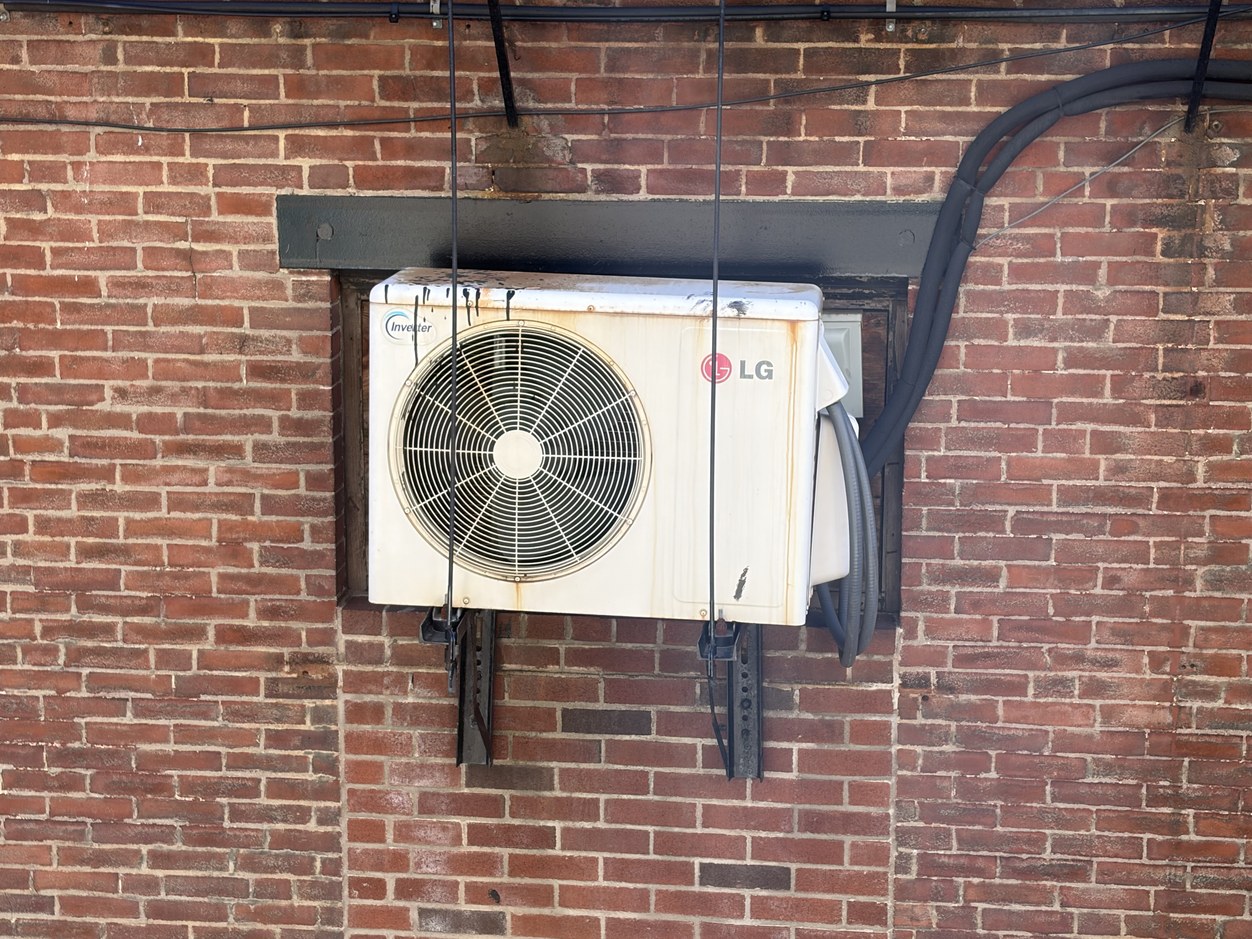
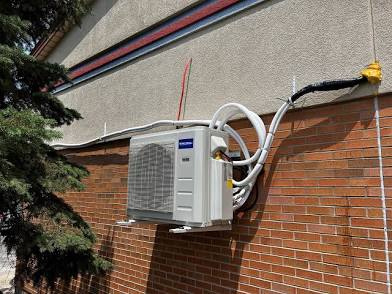
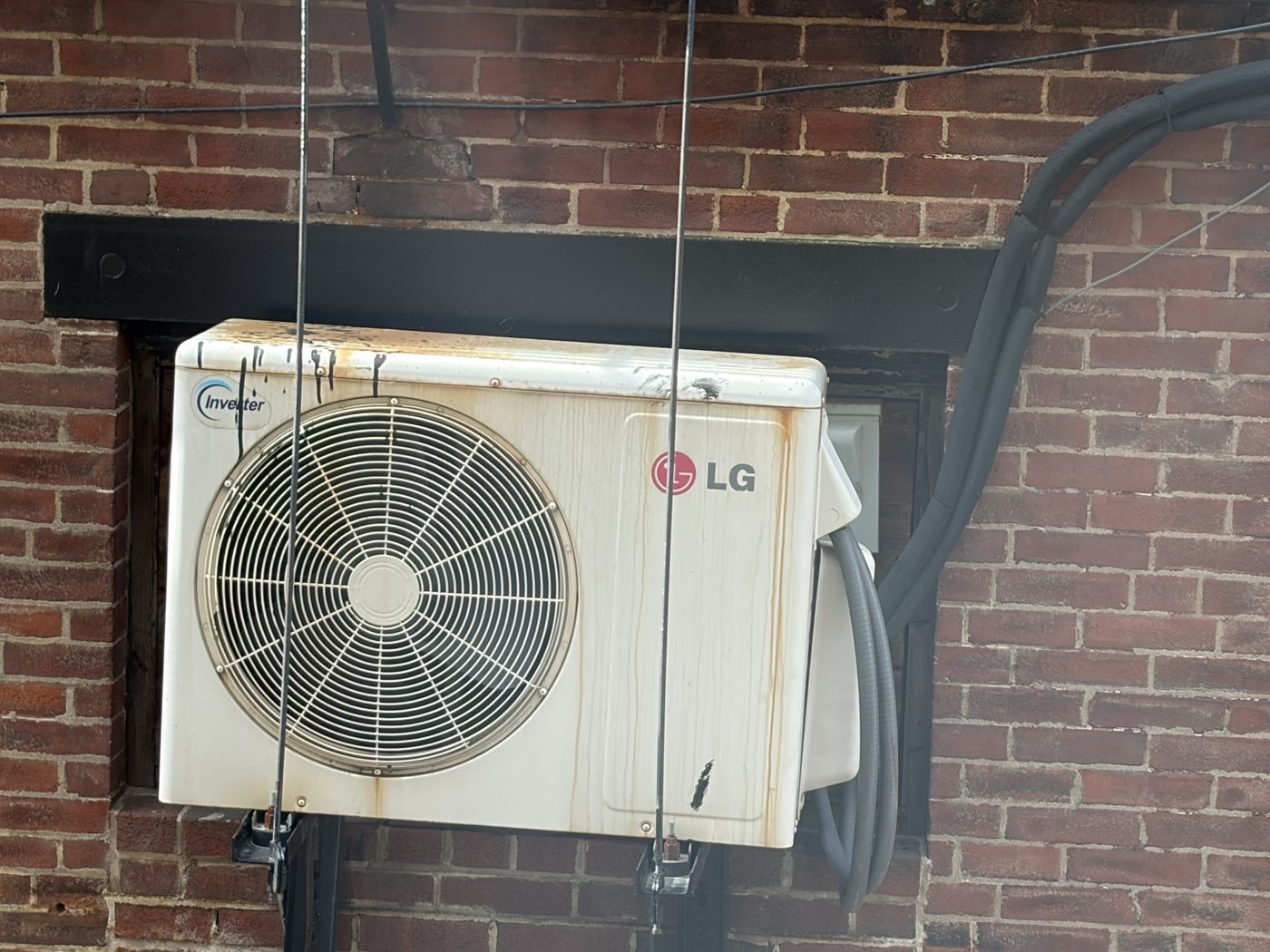
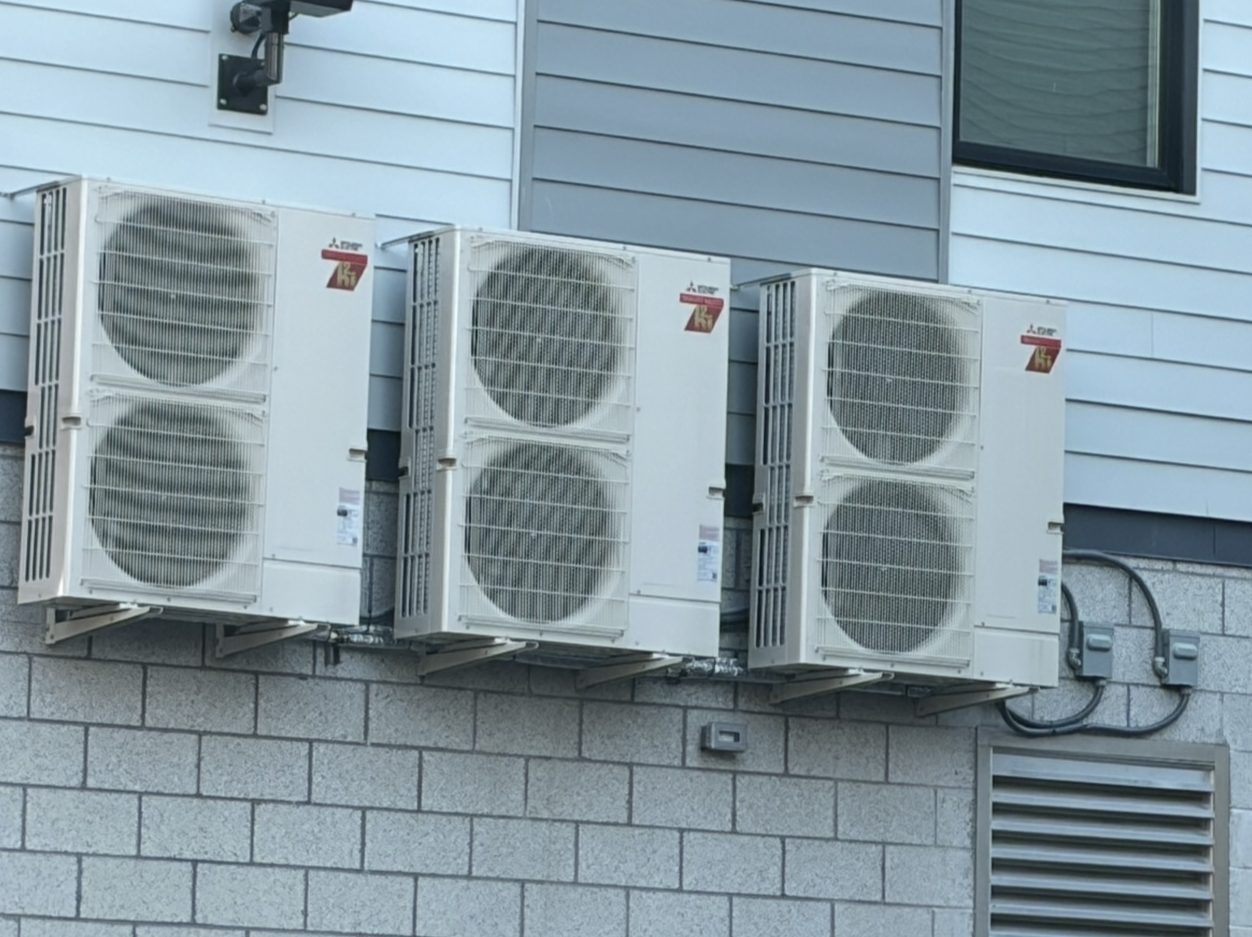
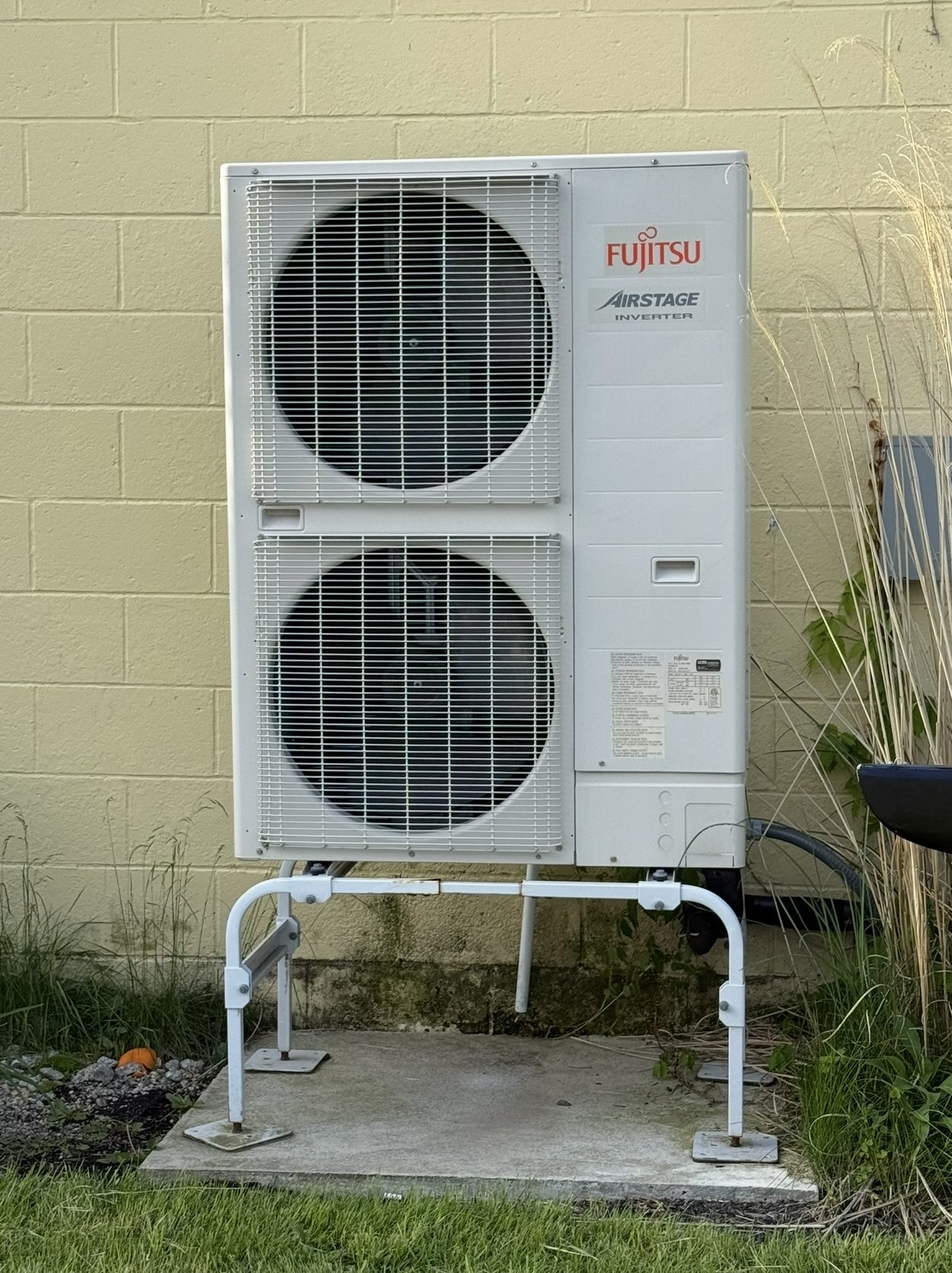
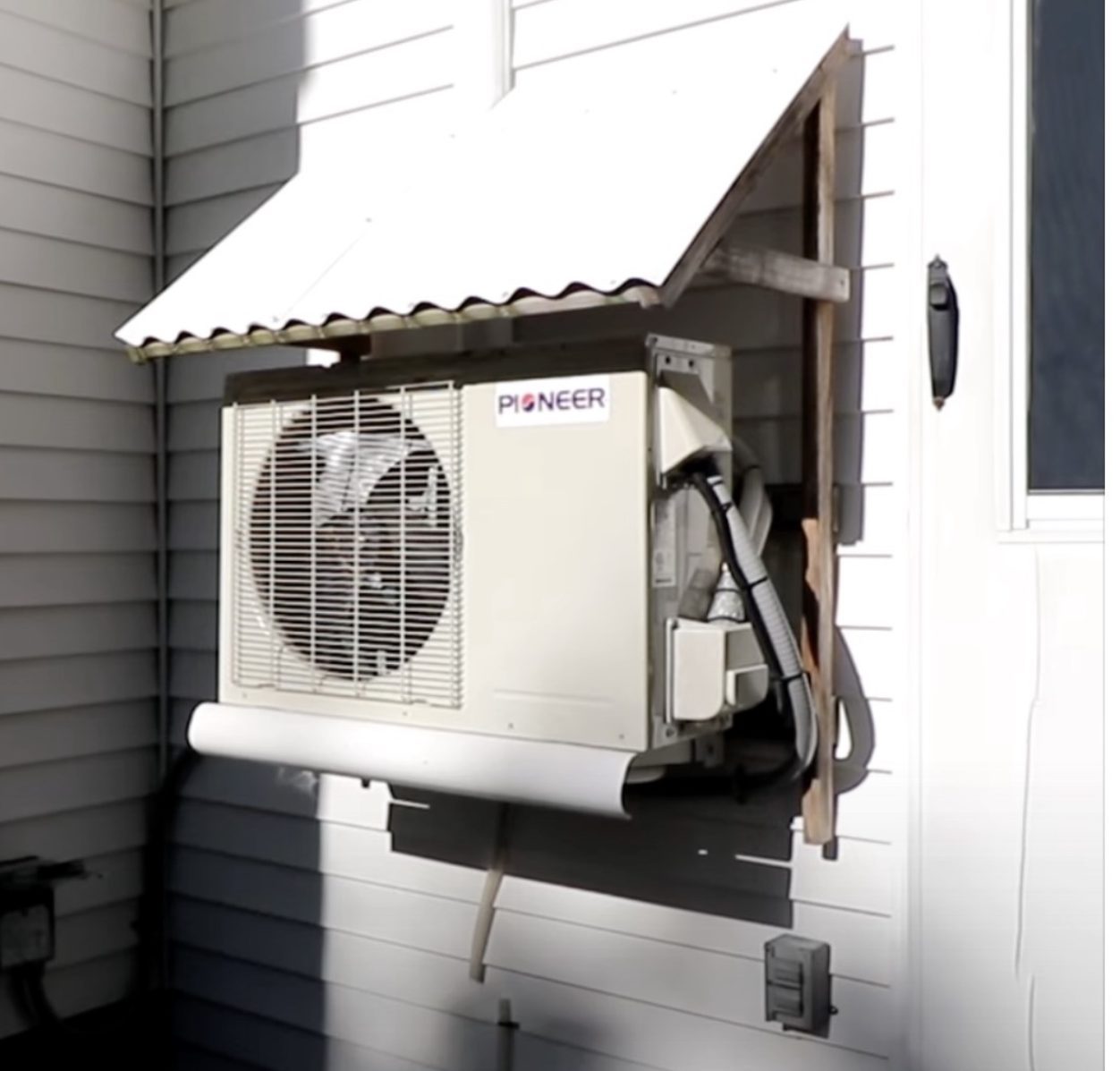
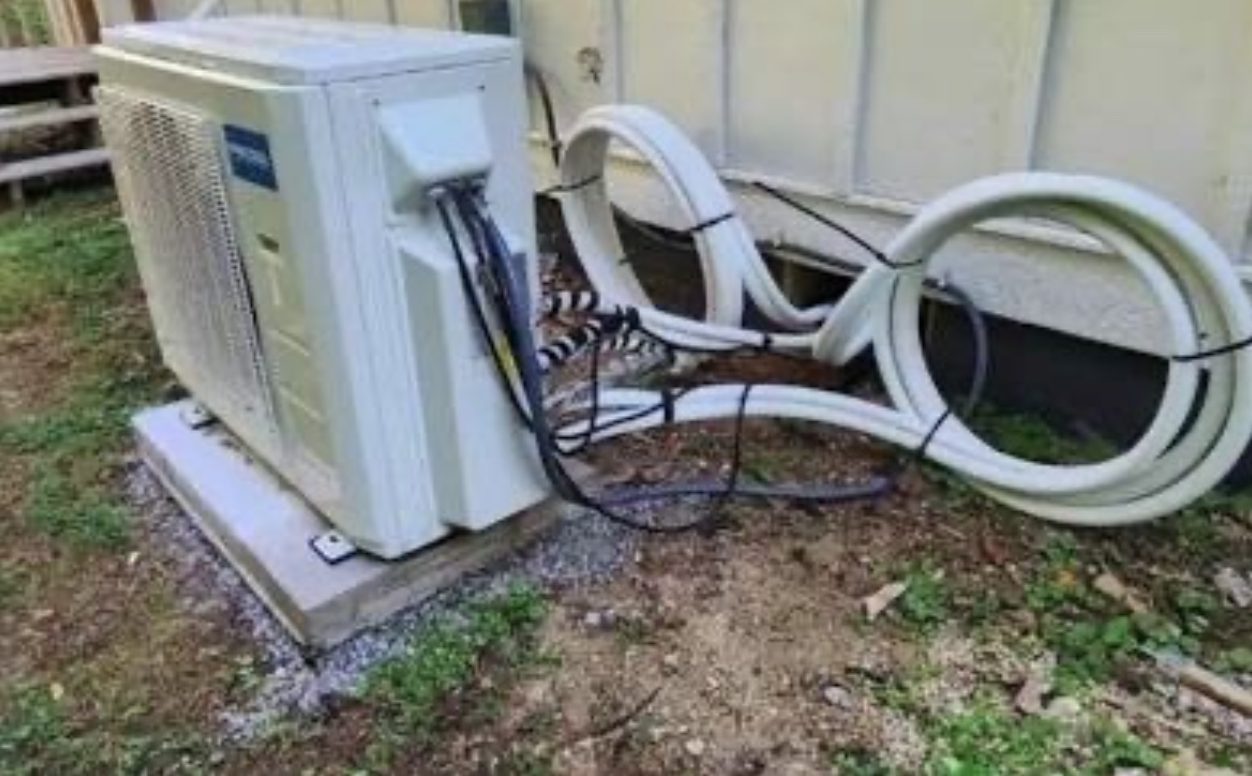
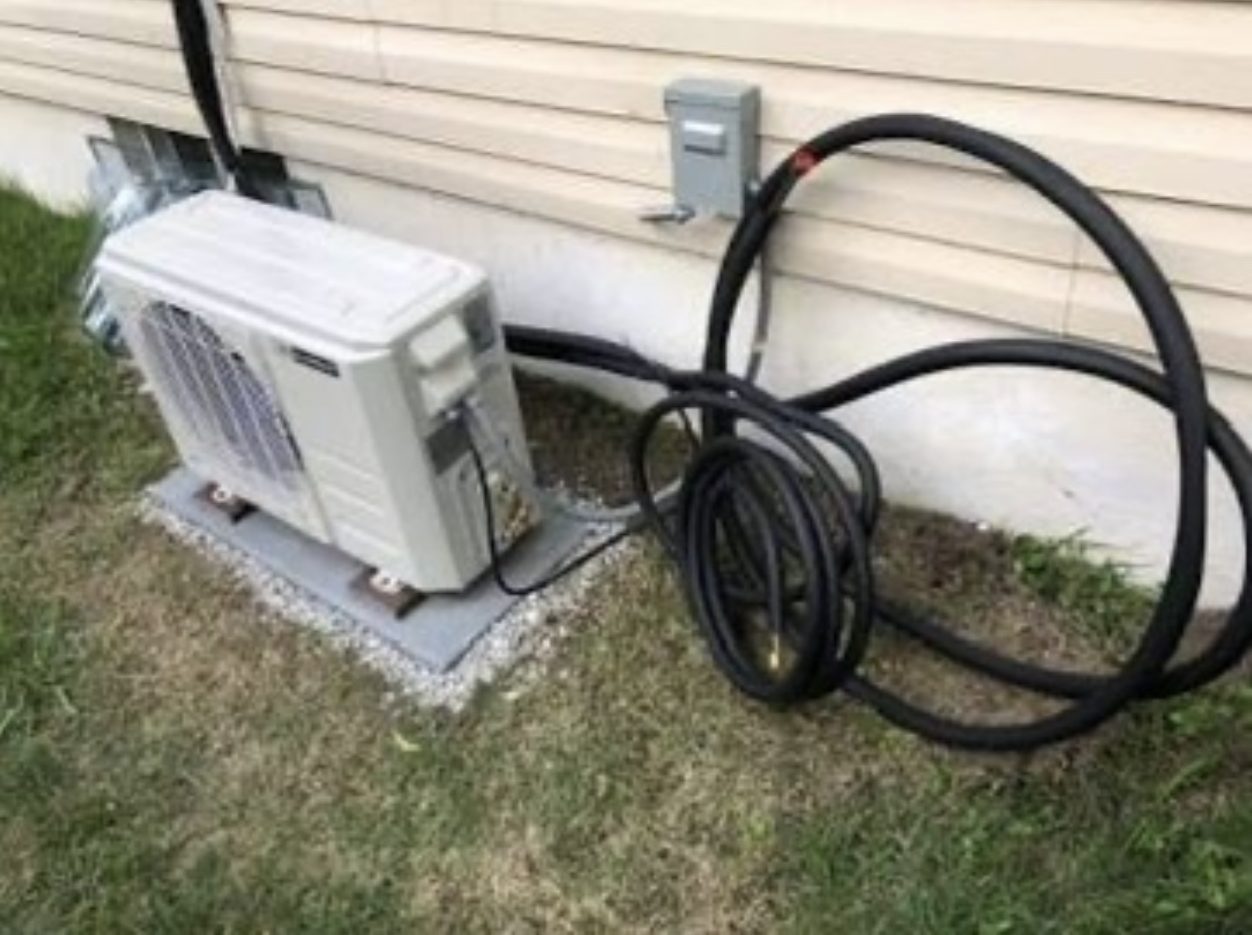
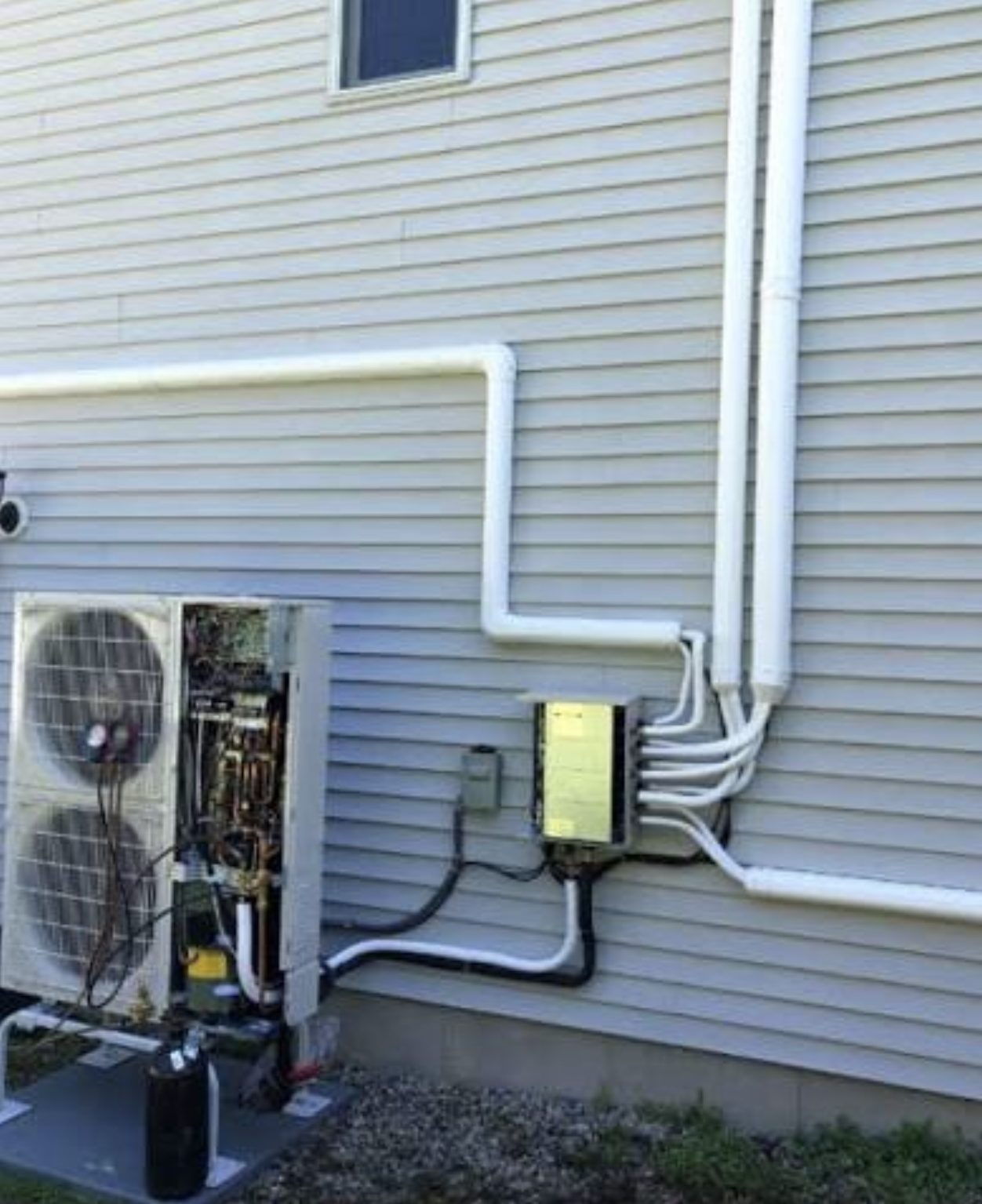
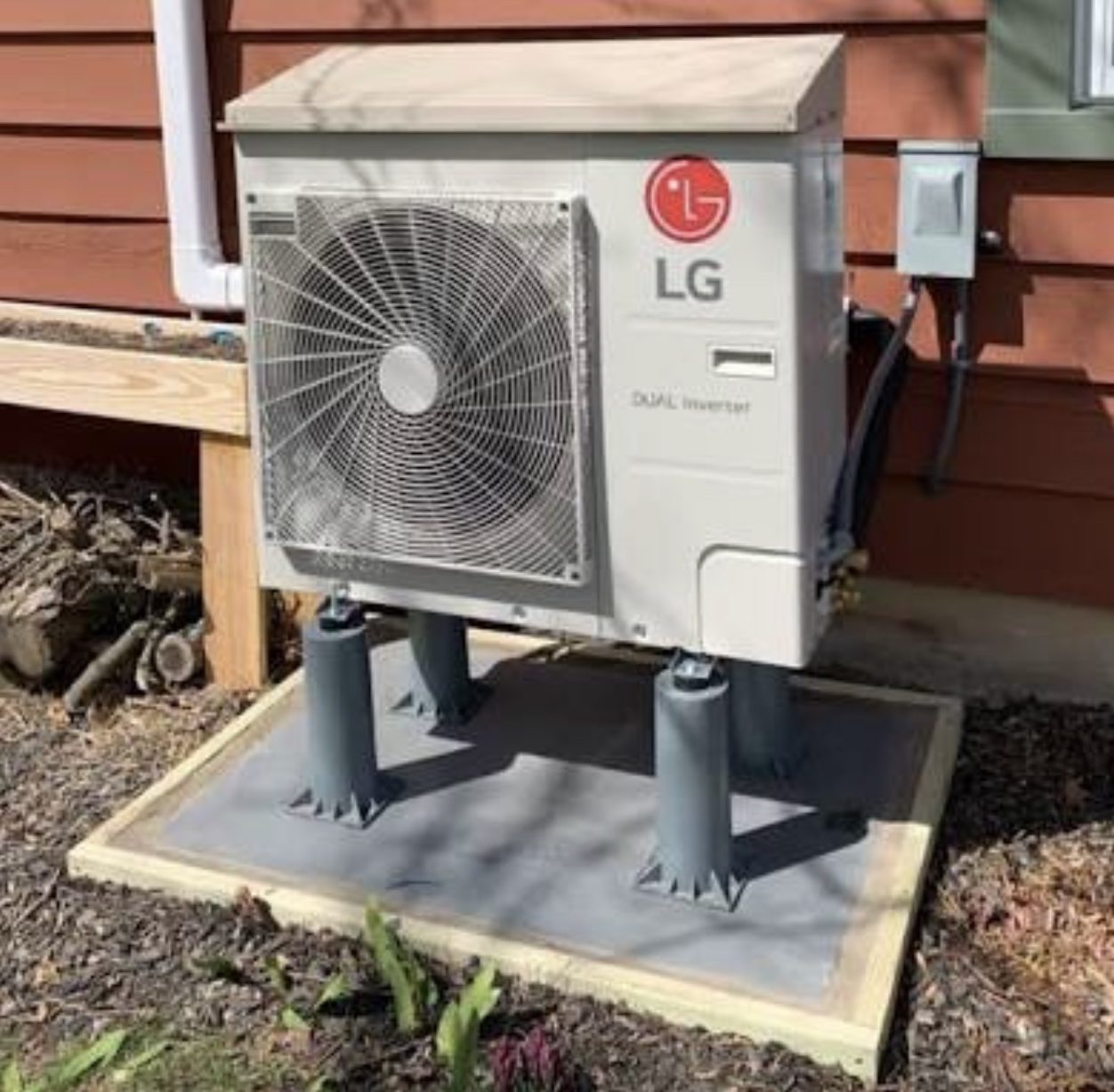
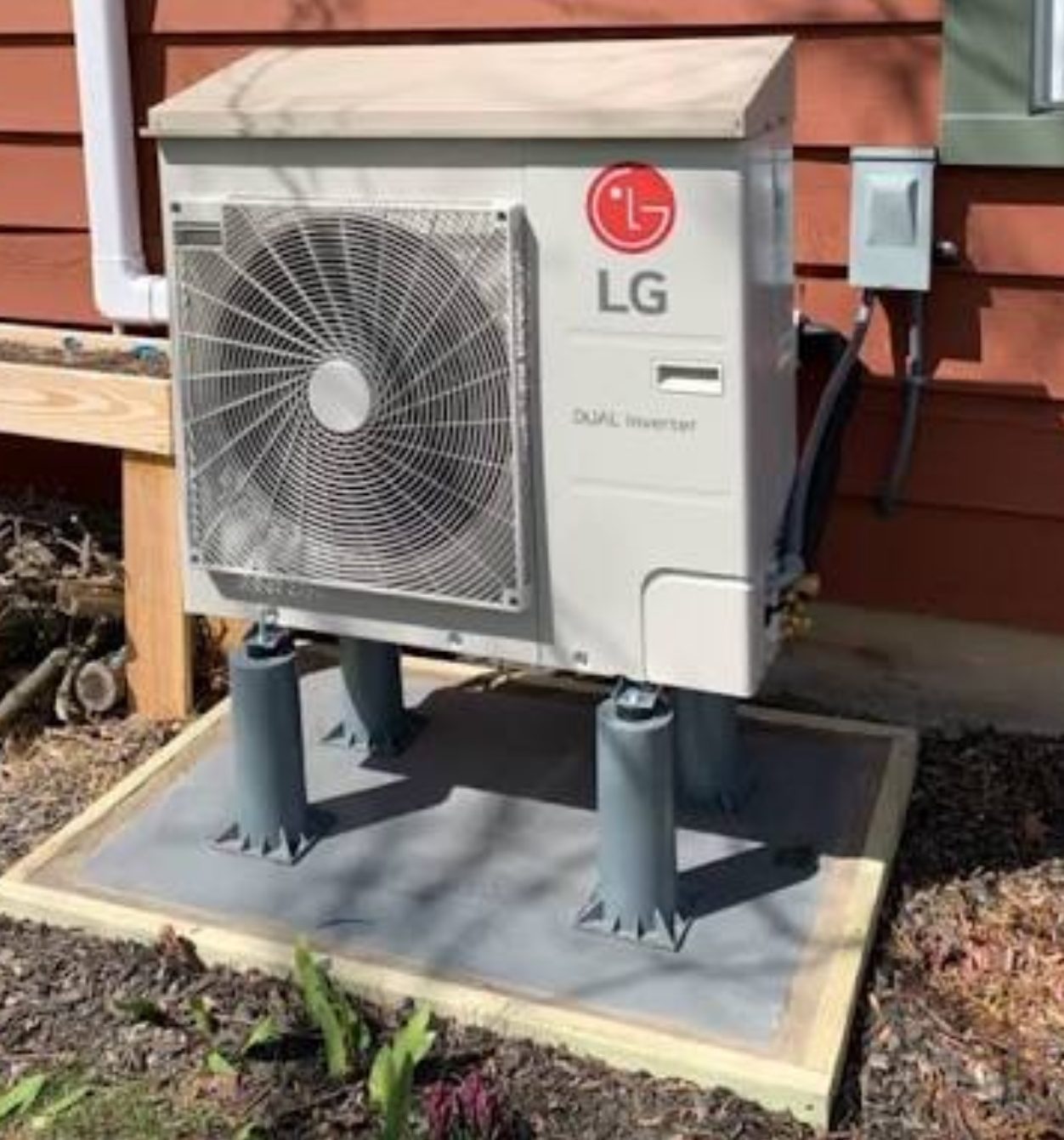
The following images are sample / illustrative of the product vocabulary exterior split heat pumps bring. They are not engineering proof of a named failure at a specific 3920 unit. They are what the policy invites onto a high-rise facade.
What a serious board would do instead
A serious board would start from the building that exists. It would treat Magic-Pak as the designed high-rise system and evaluate upgrades inside that architecture — not abandon the architecture because individual owners want balcony machines. It would refuse a free-for-all that punches new holes in a sealed envelope. It would require, before any policy shift toward exterior HVAC, independent expert work on the three risks owners already named: water discharge, noise, and aesthetic value loss — written opinions, not slogans.
A serious board would protect uniformity the way it protects paint colors and exterior lighting: as a financial control. It would recognize balconies as limited common elements whose character is part of the product sold to every owner. It would count liability before counting applause lines about heat pumps. It would ask how maintenance will work in year eight when half the condensers are dirty and the drain lines are science experiments.
A serious board would tell the truth: this tower is not a detached house. Solutions that look clever on a triple-decker can be catastrophic on an eleven-story condominium of 259 units. Seriousness is proportional to stack height.
If alternatives are truly required, study them as a building problem with building-grade engineering — not as a permission slip for exterior freelancing. Owner notes even float major-overhaul ideas such as gas conversion as the kind of systemic alternative that at least treats the property as one system. The point is that individual balcony split heat pumps are the wrong path for this asset.
The April 2025 owner proposal context shows owners already trying to force the board to confront water, noise, and aesthetic value loss with independent expertise before permitting exterior machines. That is the minimum of seriousness. Rubber-stamping “heat pumps” because the phrase polls well is fashion without underwriting.
Additional framing from the 2026-09-21 essay (owner synthesis)
Start with money, because that is what buyers and owners actually lose. Those owner memoranda present estimated percentage reductions and work illustrative figures using a conservative midrange around 5%. Scaled across 259 units, the collective equity damage in those illustrative models runs into the millions. Over a ten-year appreciation path, the same memoranda project a still larger gap between a clean facade and a cluttered one.
Why would the market punish so hard? Because condominium value is partly shared facade. You do not buy only your floor plan. You buy the first impression from Mystic Valley Parkway, the river views framed by a coherent exterior, the sense that rules exist and are enforced, and the confidence that the next buyer will see a maintained asset rather than a mechanical yard sale. When outdoor condensers multiply — different brands, mounts, covers, drains — the building stops reading as managed. It reads as a place that let owners do whatever they wanted on the limited common elements.
Walk the thought experiment the owner memorandum forces: if you examined a condominium and saw a variety of unplanned, random heating systems, you would conclude the board chose a free-for-all. That conclusion is how brokers and buyers actually decide. Magic-Pak units are designed to blend into the architecture with minimal external visibility. Split heat pumps reverse that. Outdoor condensers mount on walls or balconies. Indoor units mount on living-room walls — bulky relative to concealed Magic-Pak vents. Across hundreds of units, the result is a billboard advertising that this association no longer enforces a single exterior standard.
Break the ugly pictures into the sub-details buyers notice whether boards do or not: condenser bodies (boxy metal and plastic, fan grilles, mismatched colors, pads and stands that never match balcony design); hanging and surface lines (insulated refrigerant bundles, zip ties, metal straps, plastic covers that yellow, grey conduit that sags); wall scars (drilled holes, foam fills, flanges, unpainted patches, bolt points); grime and weathering (stained wraps, drip trails, algae-prone wet zones, oxidation on copper, debris around pads); indoor wall units (evaporator boxes on finished walls); balcony clutter (machines occupying limited common elements sold as outdoor living, not equipment yards). Now multiply. Not one house. An eleven-story condominium with 259 units. Even partial adoption creates a broken-tooth facade.
Quality-of-life impacts in the water papers are concrete: wet furniture, slippery surfaces, ruined belongings, interrupted amenity use. Irregular dripping amplified on metal railings. Water stains and algae on building surfaces. Mold, mildew, and freeze water patches in winter. Structural wear on balcony surfaces and railings, with long-term risk of concrete degradation and penetration to units below. The building, decades past its 1988 completion, was not designed for localized water loads from a forest of balcony machines.
Compare Magic-Pak. The owner papers emphasize integrated drainage that directs water away from living spaces and balconies consistent with original design. Split heat pumps place indoor evaporators — and their clog-prone drains — inside finished space. A clogged split heat pump drain fails into drywall, flooring, and downstairs neighbors. Multiple indoor units mean multiple leak points.
Then comes the sound of the policy. Residents get compressor hum, fan whoosh, refrigerant flow noise, defrost cycle noise, and vibration through imperfect mounts. Condensation pumps add racket. Debris in outdoor fans produces grinding. Insufficient mounting pads transmit vibration into walls.
Liability follows. Outdoor fans on decks, dripping onto neighbors, and sleep disruption are conflict engines. Balconies as limited common elements raise document questions: what modifications are allowed, what colors and sizes, what happens to existing openings, and how the association denies one exterior project while approving another’s HVAC sculpture.
The sales pitch for split heat pumps loves the word efficiency. The owner twenty-reasons analysis and related papers refuse to swallow that pitch whole for this building. Building-wide energy management in a large multifamily structure is not the same problem as optimizing a single suburban add-on. Individual zoning sounds attractive until inconsistent operation across a tower creates disputes and uneven performance. Electrical reality bites. High-rise conditions add wind resistance concerns for outdoor units, vibration risks from imperfect mounting, permitting and code friction for retrofits that do not match original design, and scalability problems when installation teams force a house-scale product onto a tower-scale inventory. None of this requires invented efficiency-score theater. The owner papers already say enough.
Allowing individual unit owners to install exterior heating and cooling machines on balconies year-round converts a designed high-rise into a permission slip. Architecture never designed for split heat pumps becomes a buffet of owner preferences. Maintenance decentralizes. Liability spreads into gray zones. Enforcement becomes impossible without picking winners and losers. The Notes materials ask: if the board allows one major balcony modification class, on what principled basis does it deny others? Once the exterior is open for mechanical freelancing, the documents and the politics both get uglier.
Prospective buyers should read the policy, not the marketing. If individual exterior HVAC installs are allowed or wink-nod tolerated, price the chaos. Price the future stains. Price the second buyer’s reaction when they stand on Mystic Valley Parkway and count condensers.
Policy failure as free-for-all (essay spine)
The deepest failure is not one condenser. It is the policy. Magic-Pak was the original high-rise answer: standardized, sleeve-based, comparatively discreet, serviceable in a multifamily pattern. The heat-pump policy change treats that answer as optional. It is not optional if you care about shared value.
Owner investment memoranda emphasize what ULI-style reasoning has long said: clean, cohesive facades matter to value. New England condominium commentary in those papers underscores curb appeal. NAR-linked buyer findings put exterior appearance high among purchase factors. Translate that into Medford English: if it looks cheap and chaotic from the street and from neighboring balconies, people pay less — or they do not buy at all.
Inside the unit, the damage continues. Buyers who expect premium design do not want a white plastic evaporator box as the visual centerpiece of modern HVAC. They want clean lines. Magic-Pak’s concealed approach serves that expectation. Split heat pumps advertise themselves indoors and outdoors simultaneously. Balconies compound the insult. Fill them with condensers, stands, line covers, and drip improvisations, and you convert a key amenity into a mechanical closet with a view. The owner summary is blunt: dripping onto furniture, wet surfaces, ruined items, disruption of a key amenity. That is ugly living.
Longer balcony memos walk the same risks: pooling on decks, intrusion through membranes, overflow to lower units, freeze-thaw cracking, continuous discharge, clogged drain lines, and liability fights when owner-installed equipment damages common elements.
The April 2025 owner proposal to permit individual exterior heating and cooling machines on balconies year-round is explicit about the stakes owners already saw: water intrusion, sound intrusion, and cumulative loss of value based on aesthetic derogation. That proposal language pressed for expert opinions on water discharge, noise, and aesthetic value loss before any green light. The warning was on the record: individual exterior installs are not a free lunch. They are a liability distribution scheme dressed up as owner choice.
Return to the money throughout: aesthetic derogation reduces offers and slows sales. Owner papers cite marketability arguments: uniformity widens buyer appeal; visible exterior discrepancies deter purchasers; patchwork reads as decline. Those numbers are arguments drawn from owner memoranda, not independent appraisals. Treat them as the investment case owners put on the table: aesthetics are not cosmetic preference; aesthetics are price.
These images and arguments are not engineering proof of any particular failure at a named unit. They are the visual and financial vocabulary of the product the heat-pump policy change invites onto Mystic River Park. If the board cannot look at that vocabulary and flinch, the board is not protecting the asset. Buyers should discount for chaos. Owners should fight for the asset. Nobody should walk into a purchase at 3920 believing that “heat pumps” sound modern and therefore must be good for a stacked multifamily tower. Modern branding does not save a building that looks like it gave up. When a high-rise condo trades a designed through-wall HVAC system for a free-for-all of outdoor condensers, hanging refrigerant lines, indoor wall boxes, drain tubes, and mismatched equipment, the market reads the message instantly: this association lost control of its exterior. That is how value dies — with the slow, visible conversion of a coherent building into industrial patchwork.
Closing: Caveat emptor
3920 Mystic Valley Parkway — Mystic River Park — is a high-rise condominium built around Magic-Pak through-wall systems. The split heat pump policy change points the building toward outdoor machines, indoor wall boxes, hanging lines, and owner-by-owner exterior decisions. That path looks awful. That path leaks. That path hums and vibrates. That path multiplies envelope penetrations. That path is inefficient relative to the cold-climate and multifamily logic in the owner papers. And above all, that path devastates property value by destroying the uniformity and curb appeal that condominium equity depends on.
This is not soft disagreement. This is a warning. Buyers should discount for chaos. Owners should fight for the asset. Boards that rubber-stamp exterior HVAC freelancing are not modernizing a tower. They are tagging it with the visual and mechanical markers of decline.
Caveat emptor. If you buy into a free-for-all of balcony split heat pumps at 3920, you are not buying progress. You are buying someone else’s experiment — and paying for it in equity when the next buyer walks up, looks at the facade, and walks away.
Sources
- Owner essay: Heat Pump Policy Change: Why Mini-Splits Are Wrong for 3920 Mystic Valley Parkway (2026-09-21), synthesizing owner memoranda for this website.
- loss of Investment, Memorandum 4, 2025 (Apr. 15, 2025) — aesthetics / illustrative 5% on ~$550k; 10-year projection; ULI/NAR framing as cited in that memo.
- Memorandum, Noise 4. 25 (Apr. 15, 2025) — 40–60 dB outdoor vs under-30 dB Magic-Pak comparison as framed there.
- Informational Memorandum Property Loss / v2Informational Memorandum / letter materials — water discharge, IMC 307 / 780 CMR nuisance framing, ~1.5–3 pints/hour condensate illustration, 1988 Magic-Pak design.
- Here are twenty potential reasons why a mini… — practical objections to replacing Magic-Pak in an eleven-story condominium; water-damage comparison notes.
- Mini-Split Summary; Mini-Split Memorandum; Notes, converting to gas and private nuisance; PRESERVE YOUR INVESTMENT; To.docx balcony water/risk memo lineage.
- Condo Board Affidavits 8/3/24 (Liability / General / related) — personal-injury / rotating parts / insurance pass-through opinions as stated therein.
- Jim Morrison, Boston Globe, Feb. 21, 2024 — mold/dust/cleaning cost quotes actually retrieved for this build.
- MassHVAC, Cold-Climate Heat Pumps Explained (Massachusetts 2026) — capacity-vs-temperature points actually retrieved for this build.
- Sample / illustrative install photographs from owner source materials (not proof of a named 3920 unit failure).
- Boston Globe, “Heat-pump contractor accused of ‘staggering fraud’ of nearly $8 million from Mass Save,” Sept. 22, 2026 — Mass Save utilities’ civil suit, 220 inspected sites, less-than-10-percent-to-specifications allegation: bostonglobe.com.
- Mass Save, “Fall 2026 Program Updates: Strengthening Oversight and Consumer Protections,” Sept. 23, 2026 — expanded inspections and contractor vetting: masssave.com.
This page is website commentary for prospective buyers and owners. It is not an engineering report, not an appraisal, and not legal advice.