
Mold symptoms in a “sick building”: what to watch for, how to test, and what to do

If you suspect mold where you live: what health agencies say about symptoms, how to check the connection to your home, how testing works, and the Massachusetts basics.
Our earlier post covered how water getting into a building can lead to mold and lawsuits. This one is practical. We are not saying mold has been found at 3920. This is general information for anyone who suspects a problem.
What mold symptoms look like
The EPA says mold can cause hay fever-type allergic reactions such as sneezing, runny nose, red eyes, and skin rash, and that these reactions “can be immediate or delayed.” It can trigger asthma attacks in mold-allergic people with asthma and irritate the eyes, skin, nose, throat, and lungs even in people who aren’t allergic. The Massachusetts Department of Public Health (DPH) lists eye, nose, throat, and respiratory irritation and worsening asthma.
The Institute of Medicine’s 2004 report Damp Indoor Spaces and Health found sufficient evidence linking damp indoor spaces to upper respiratory symptoms, cough, wheeze, and asthma symptoms in sensitized people. The World Health Organization’s 2009 guidelines on dampness and mould found the most important effects are more respiratory symptoms, allergies, asthma, and immune effects.
People in damp buildings also report headaches and fatigue, but CDC’s NIOSH says respiratory effects are the best studied and evidence on mold toxins (mycotoxins) is limited. These symptoms also overlap with colds and seasonal allergies.
Q&A: Possible symptoms of mold exposure
General information only, not medical advice. If you have symptoms, talk to a doctor or other healthcare provider.
What symptoms can mold exposure cause?
In any building with dampness or mold, health agencies say exposure may cause a stuffy or runny nose, sneezing, itchy or watery eyes, a scratchy or sore throat, cough, wheeze, and skin irritation or rash (CDC; Mayo Clinic). Some people have no symptoms at all.
What are the mild or easy-to-miss signs?
Many look like a cold or seasonal allergies: postnasal drip, a cough that lingers, itchy skin, or symptoms that flare in damp weather. Mayo Clinic notes reactions can be immediate or delayed. A useful clue NIOSH points to is symptoms that improve when you are away from a building and return when you come back.
What about headaches, fatigue, or sinus infections?
People in damp buildings do report headaches and fatigue, but the evidence that mold causes them is weaker than for breathing symptoms; the Institute of Medicine found insufficient evidence to link them. Mayo Clinic lists allergic fungal sinusitis, an inflammatory reaction to fungus in the sinuses, as a possible complication of mold allergy.
Can mold make asthma worse?
Yes, it can. The CDC says people with asthma or mold allergy may have severe reactions, and the IOM linked damp indoor spaces to asthma symptoms in people with asthma. The WHO 2009 guidelines list respiratory symptoms, allergies, and asthma among the most important effects.
What are the more serious effects?
- Hypersensitivity pneumonitis, a rare immune-driven lung inflammation, has been linked to mold exposure in susceptible people (CDC, citing the IOM). Signs can include cough, shortness of breath, and sometimes fever.
- Fungal infections such as aspergillosis. The CDC says most people breathe in Aspergillus spores daily without getting sick, but people with weakened immune systems or lung diseases are most at risk.
Who is most at risk?
People with allergies or asthma, people with chronic lung disease, and people with weakened immune systems (for example, after an organ or stem cell transplant), per the CDC and Mayo Clinic. The CDC also notes studies linking early mold exposure to asthma in some children.
Can mold “infect” you, or is it usually allergy or irritation?
For most healthy people, effects are allergic or irritant reactions, not infections. Mayo Clinic says mold generally doesn’t cause infections throughout the body in most people; the exceptions are people with weakened immune systems or ongoing lung conditions. MedlinePlus gives the same overview.
Does “black mold” cause memory problems or toxic effects?
Some molds, including Stachybotrys (“black mold”), can produce toxins called mycotoxins. But the IOM found inadequate or insufficient evidence linking indoor mold to memory loss, other neurological problems, or fatigue, and NIOSH calls the evidence on mycotoxins in buildings limited. That means it is not proven either way. Color doesn’t tell you how harmful a mold is; the CDC says any mold growing indoors should be removed and the moisture fixed.
What should I do if I suspect mold is affecting me?
- See a doctor. Tell them about home exposure: leaks, musty odors, stains, and when symptoms get better or worse.
- Document. Keep a symptom log and dated photos of water damage or growth.
- Report leaks to management in writing and keep copies. Mass. DPH stresses fixing the moisture source.
- Read more: our earlier post on water, mold, and buildings.
Is it the building? Look for patterns
- Better away, worse back home. NIOSH says nasal symptoms that improve or disappear away from a damp building may be caused by it. For hypersensitivity pneumonitis, a serious lung condition, the first clue can be improvement away and worsening on return.
- Worse in one room, such as one with a stained ceiling, a damp window, or a musty smell.
- Worse after a leak or heavy rain.
Then see your healthcare provider, as NIOSH advises. Describe the leaks, odors, and patterns, and ask about allergy testing or a specialist. As DPH notes, a mold test can’t tell whether your symptoms were caused by mold. Keep a log: date, symptoms, where you were, weather, leaks.
How mold testing actually works
- Look and smell first. NIOSH says thorough visual inspections and musty odors are more reliable than air sampling. The EPA says, “In most cases, if visible mold growth is present, sampling is unnecessary.” The CDC: “CDC does not recommend mold testing,” partly because there are no set standards for acceptable mold levels in a home.
- Moisture mapping. Mold follows water. The EPA says moisture meters can help locate hidden mold; NIOSH notes infrared cameras also help find dampness.
- Air vs. surface samples. The EPA notes air sampling reflects “only the moment when the sampling took place,” and NIOSH warns short-term results, especially negatives, may not reflect actual exposure. Surface samples (tape lifts, swabs) can confirm a stain is mold or check cleanup.
- DIY kits face the same limits: no health-based standard to compare against, and results that are hard to interpret. The EPA warns poor sampling plans “may generate misleading, confusing and useless results.”
When professional testing matters. The EPA says sampling may be considered when litigation is involved, the source is unclear, or health concerns are a problem. DPH adds cases where symptoms continue after repairs, or a doctor requests it. If results could become evidence, ask for a written sampling plan with outdoor comparison samples, a signed chain-of-custody form tracking each sample to the lab, and a lab accredited under AIHA-LAP’s EMLAP program.
What a professional mold test looks like
- Booking. Describe the leaks, odors, and symptoms. Ask what the price includes and which lab will be used.
- Visual inspection of the areas of concern, with photos.
- Moisture readings with meters, sometimes with an infrared camera.
- Samples, only where they answer a question: air, surface (tape or swab), or bulk samples, meaning pieces of material such as drywall or carpet, per the EPA.
- An outdoor control sample for comparison. Mold Spotters’ pricing page says one of its two included air samples must be an outdoor control.
- Lab analysis, ideally at an EMLAP-accredited lab.
- A written report with observations, photos, lab results, and recommendations.
How long it takes. Angi says a basic inspection can take as little as two hours, and a thorough check of hard-to-reach areas up to six. Elite Home & Mold Inspections says standard lab results typically take about 5–7 business days, or about 2–3 with expedited service where available. Mold Spotters says it emails the lab results and its report once analysis is complete.
What it costs. Prices vary with unit size, access, and the number of samples, so get a written quote. Published Greater Boston examples: Mold Spotters lists residential inspections, condo units included, “as low as $450.00” with two samples, plus $75 per extra sample. MI&T, a testing-only company with a Brookline office, lists $350–$500 with two samples, plus $75–$100 per extra sample. Nationally, Angi reports most inspections cost $303–$1,075 (average $689), and per-sample fees covering collection and lab work of $250–$350 for air and $200–$300 for swabs.
Where mold tends to hide in buildings
- Inside exterior walls near envelope leaks. In one NIOSH case, cracked exterior walls let rain into wall cavities and mold grew under wallpaper on perimeter walls.
- Window perimeters. The CDC lists window leaks; the EPA calls condensation a humidity warning sign.
- Under sinks and inside walls around leaking or condensing pipes (EPA).
- HVAC and air handlers: drip pans, condensate lines, ductwork. The EPA says not to run a system you suspect is contaminated; it could spread mold.
- Heat pump and split-system penetrations. Holes for refrigerant lines, wiring, and drains open the envelope; NIOSH stresses proper flashing at openings for ducts, pipes, and wires.
- Basements, and walls behind furniture or in closets on exterior walls, where cold surfaces, little air movement, and condensation can combine.
Symptoms don’t differ by location, but where you feel worst can point to the source.
What household mold can look like
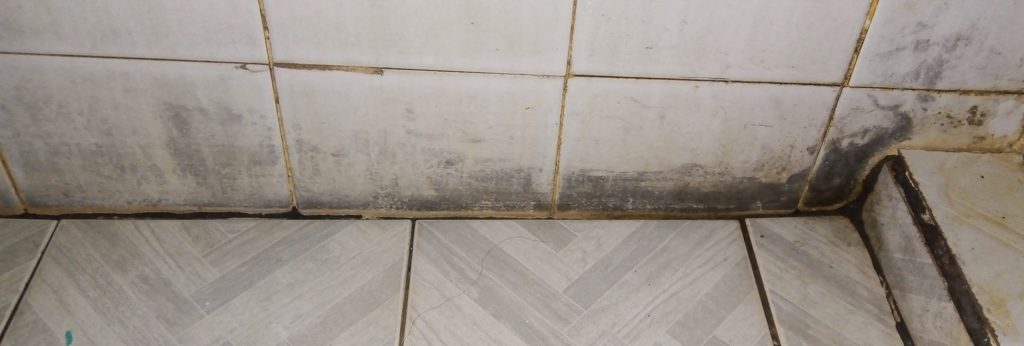

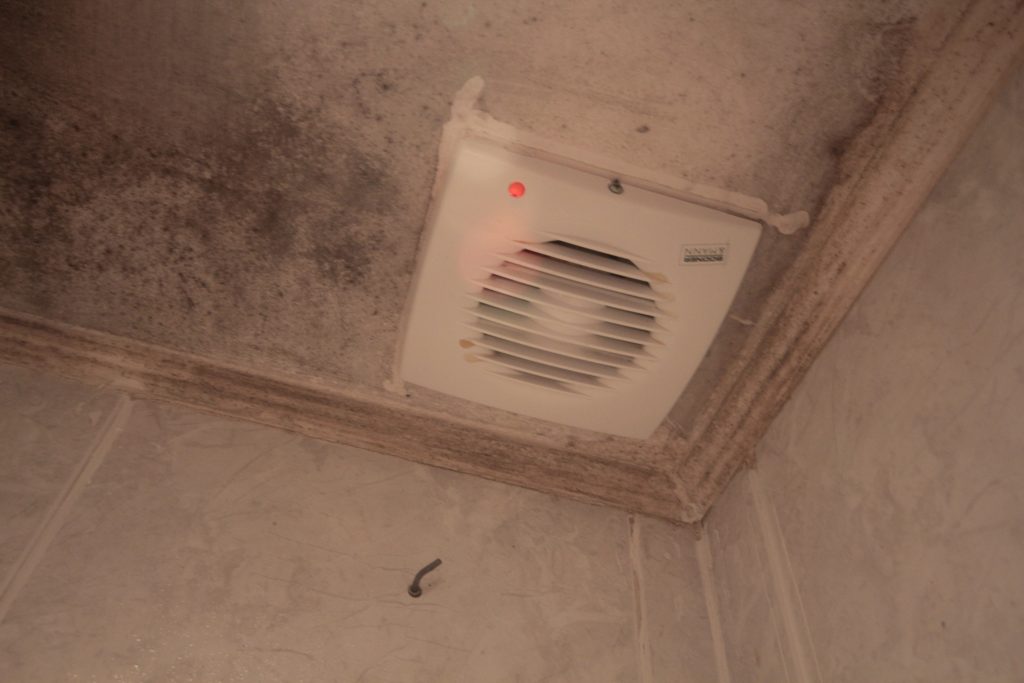

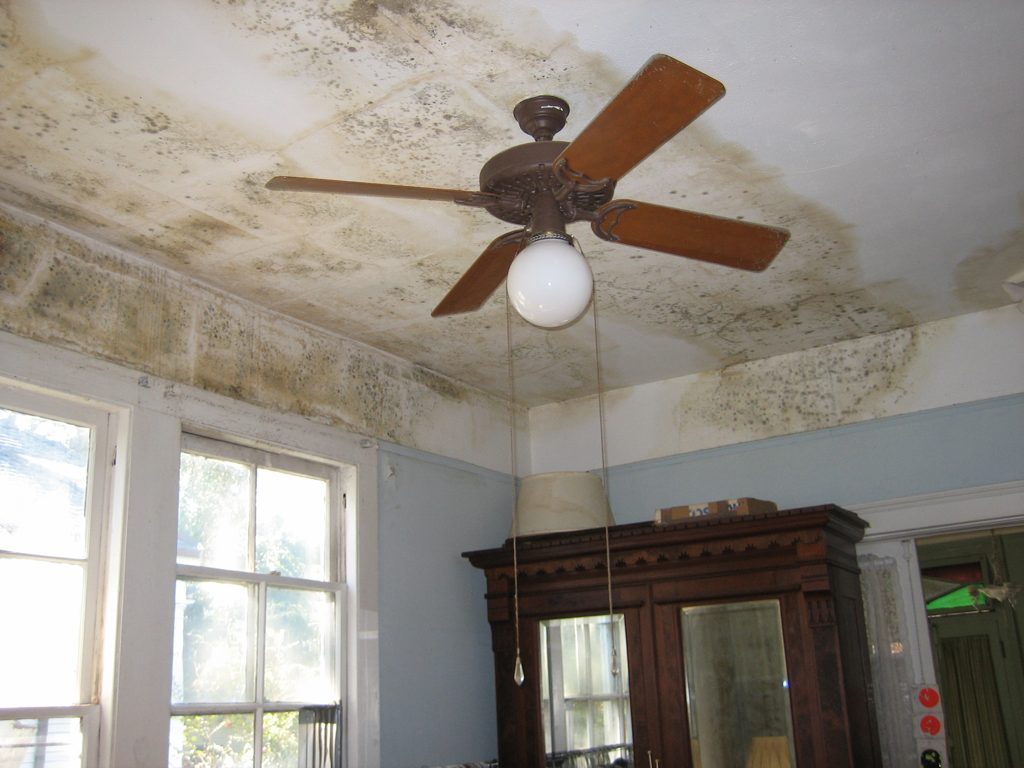

If you think there is a connection
- See a doctor and document: dated photos, leak dates, repair visits, medical records.
- Give written notice to management and the trustees, including the person the association must designate to oversee common-area maintenance and repair (c. 183A, §10(k)).
- Contact the Medford Board of Health through the city’s Inspectional Services & Environmental Health office. DPH says mold growth in building components is considered a public health nuisance subject to Board of Health enforcement (M.G.L. c. 111, §122). DPH’s Indoor Air Quality program covers public buildings but offers guidance.
- Don’t open walls yourself; the EPA warns disturbing hidden mold can release spores.
- Keep copies of everything.
Tracing the water to your unit
Build a timeline: your leak dates and photos, what neighbors nearby have seen, and where staining appears. Under c. 183A, §10, owners can inspect the association’s contracts for work, invoices, minutes, and insurance policies; see our post on how to request condo records. Ask for engineering or envelope reports and leak work orders. Repeated moisture readings at the same spots after rain help tie a wet wall to outside water.
Massachusetts legal options, in plain English
This is general information, not legal advice. Talk to a Massachusetts lawyer about your situation.
- Negligence against the condo trust. The association manages the common areas and can sue and be sued over them (c. 183A, §10(b)). Your master deed defines which parts are common areas. If the trust fails to reasonably maintain them and damage follows, an owner may have a negligence claim. Our earlier post covers Massachusetts cases.
- Contractors and managers whose work or neglect caused leaks may also face claims. Construction-defect tort claims have an outer limit: no more than six years after the work was opened to use or substantially completed (c. 260, §2B).
- Insurance. The state Division of Insurance explains the association’s master policy usually covers the building, while a unit owner’s HO-6 policy covers what the master policy doesn’t. Many policies limit coverage for gradual leaks and mold; read yours and report claims promptly.
- The deadline. Tort claims generally must be filed within three years after the claim accrues (c. 260, §2A). Under the discovery rule, the clock starts when you knew, or reasonably should have known, that you may have been harmed by someone else’s conduct. In Doherty v. Admiral’s Flagship Condominium Trust, it saved an owner’s negligence claim though leaks began years earlier, but the court left open whether the clock runs from finding the mold or from first symptoms. Don’t wait.
- Proof of causation. You must show the mold caused your illness. In DeRosa v. Lenox Farms (2024), a renter’s case, the trial judge said expert testimony was needed. The Appeals Court reversed, pointing to her medical records, allergy tests, doctor’s letters, symptoms that eased when she was away, and an inspection with moisture readings and lab-analyzed samples.
Places that test for mold (examples, not endorsements)
Independence matters: a company that also sells mold removal has a financial stake in finding a problem. Ask any firm about credentials, its sampling plan, chain of custody, and which lab it uses.
- May Indoor Air Investigations LLC, Tyngsborough. Says it has no financial arrangements with remediation companies. mayindoorair.com
- Elite Home & Mold Inspections, Melrose. Says it does not perform mold remediation. Its site also lists duct cleaning; ask about that if HVAC is at issue. eliteinspectionsma.com
- Mold Spotters, Braintree. Says it is not involved in mold remediation. moldtestinspections.com
- EMSL Analytical, Woburn lab (lab). Lists EMLAP accreditation, Lab ID 180179. emsl.com
- Check any lab in the AIHA-LAP accredited lab directory.
Caveat emptor.
Sources
- CDC, Mold: About
- CDC/NIOSH, Mold, Testing, and Remediation
- CDC/NIOSH, Alert: Preventing Occupational Respiratory Disease from Exposures Caused by Dampness (Pub. 2013-102)
- EPA, A Brief Guide to Mold, Moisture and Your Home
- EPA, Mold Course, Chapter 3
- World Health Organization (2009), WHO Guidelines for Indoor Air Quality: Dampness and Mould
- CDC, Aspergillosis Basics
- Mayo Clinic, Mold allergy: Symptoms and causes
- NIH/MedlinePlus, Molds
- Institute of Medicine (2004), Damp Indoor Spaces and Health
- Mass. DPH, Indoor Air Quality Program; Mold, Moisture, and Mildew; Guidance Regarding Testing for Mold; Remediation and Prevention of Mold Growth
- Mass. Division of Insurance, Understanding Home Insurance
- City of Medford, Inspectional Services & Environmental Health
- M.G.L. c. 183A, §10; c. 260, §2A; c. 260, §2B
- Bowen v. Eli Lilly & Co., 408 Mass. 204 (1990); Doherty v. Admiral’s Flagship Condominium Trust, 80 Mass. App. Ct. 104 (2011); DeRosa v. Lenox Farms L.P., No. 23-P-136 (Mass. App. Ct. 2024)
- AIHA-LAP, Environmental Microbiology Laboratory Accreditation Program (EMLAP)
- Cost and timing: Angi, How Much Does a Mold Inspection Cost? (2026); Mold Spotters pricing; MI&T pricing; Elite Home & Mold Inspections, mold testing